The central idea
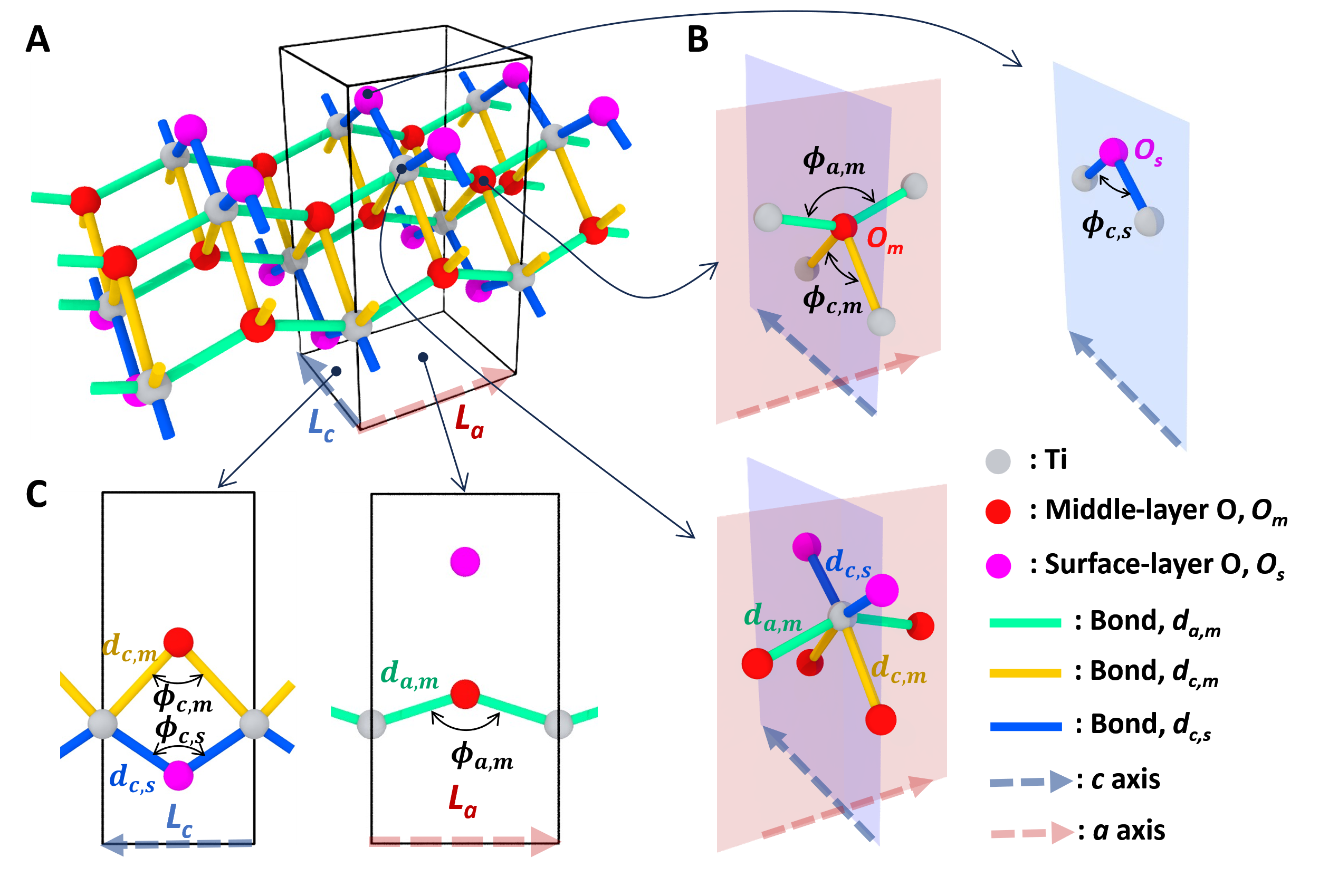
The two in-plane axes carry load through different Ti–O network architectures. Combining directional tensile measurements with an orthotropic model and DFT connects measured anisotropy to bond connectivity, local deformation, and vacancy arrangement.
What the manuscript reports
The supplied manuscript reports a c-axis tensile modulus approximately 2.6 times the a-axis value. DFT links elastic and cleavage anisotropy to the Ti–O networks and examines how titanium vacancies soften the sheet and alter directional stiffness at fixed composition.
Scope of the result
This manuscript is under review. Its experimental fracture resistance exceeds pristine cleavage predictions, with crack-path complexity proposed as an additional source of resistance. The discrepancy is not presented as a closed quantitative explanation.